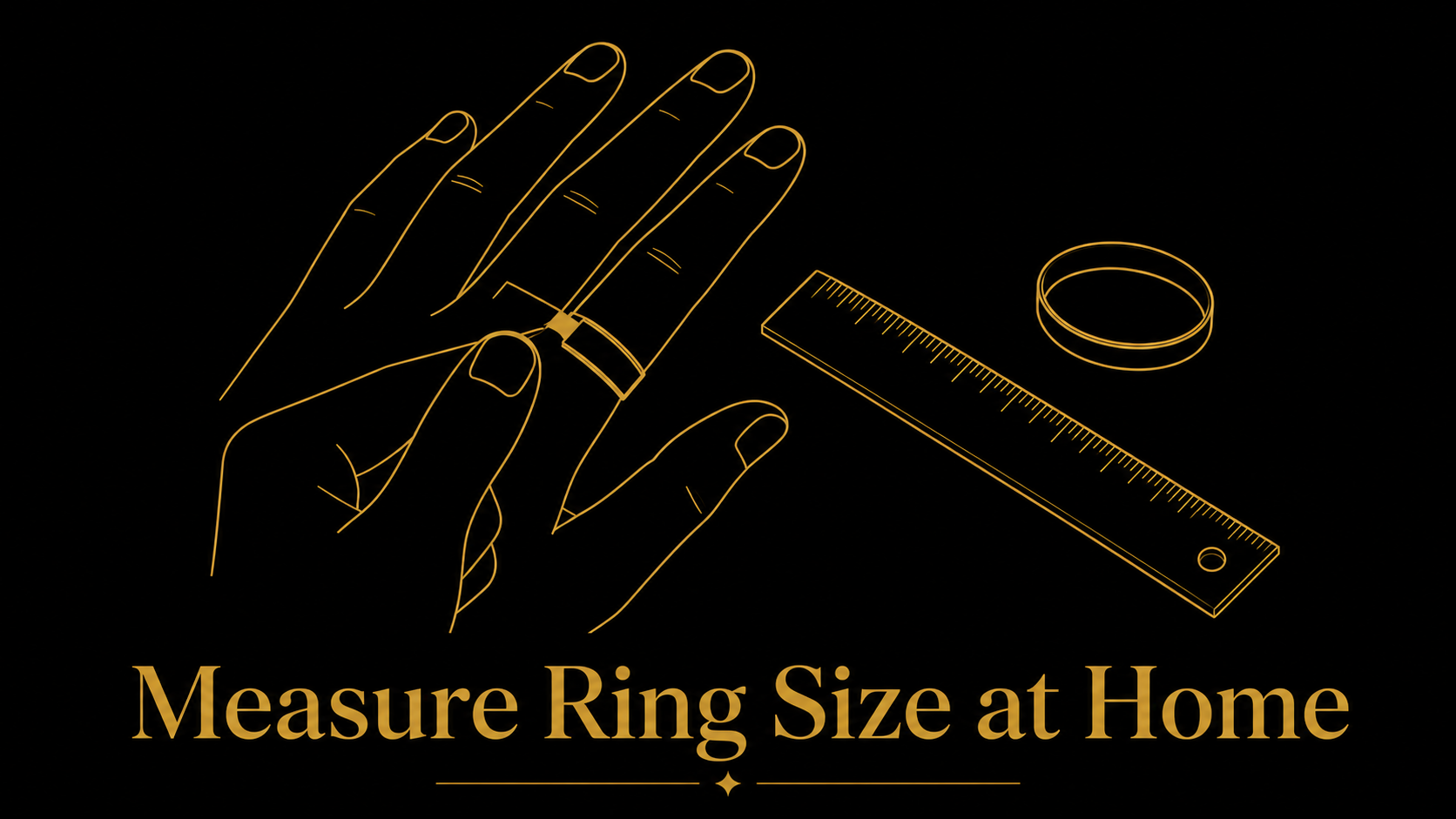
If you need to know how to measure ring size at home, you do not need a jewelry store visit or a plastic sizing kit. Most people need a quick answer when they are buying online, planning a surprise gift, or checking a size outside store hours. The good news is that you can get a useful measurement with a phone, a strip of paper, or a ring you already wear.
The best method depends on what you have in front of you. A screen-based tool is fast, the paper method is flexible, and an existing ring usually gives the most repeatable result. Use the steps below slowly, measure twice, and compare your result with our free online tool before placing an order.
Method 1 - Use an Online Ring Sizer on Your Phone Screen
A phone screen is the fastest starting point because it lets you compare a real ring directly against a circle on the display. This works best when you already own a ring that fits the same finger. A rough screen estimate is useful, but calibration makes a noticeable difference.
Open our ring size calculator on your phone and follow the on-screen prompt to calibrate with a bank card or another standard card. Once the scale is corrected for your screen, place the ring flat on the display and adjust the circle until the inside edge of the ring matches the guide exactly.
- Use the actual finger you are buying for because ring size changes across fingers and hands.
- Remove thick phone cases if they make it hard to lay the ring flat on the screen.
- Match the inside edge of the ring, not the outside metal rim.
- Repeat the fit two or three times to see if you land on the same size.
Method 2 - The String or Paper Method
The string or paper method is popular because almost every home has the supplies. It is useful when you do not have a ring to compare on screen and want to measure your finger directly. A thin strip of paper is usually better than string because it does not stretch as easily.
Wrap the strip around the base of your finger, mark the point where the ends meet, and measure that length with a ruler in millimeters. Then enter the measurement into the ring size calculator to convert circumference into the closest ring size for your country.
- Cut a narrow strip so it bends easily without bunching up.
- Pull it snug enough to stay in place but not so tight that it digs into skin.
- Mark the overlap with a fine pen for a cleaner reading.
- Measure at least twice and use the more consistent number.
Method 3 - Use an Existing Ring You Own
If you already have a ring that fits the correct finger, this is often the easiest home method to trust. You are measuring an object that already feels comfortable, so there is less guesswork than measuring your finger when your hands are cold, warm, or slightly swollen.
Place the ring on a ruler to read the inner diameter, or compare it directly against the on-screen circles in our ring size calculator. A clear top-down view matters. If the ring sits at an angle, your reading will look larger than the real inside diameter.
- Measure the inside edge only, from one inner side to the other.
- Avoid using very wide bands because they may fit differently from narrow rings.
- If the ring is slightly oval from wear, rotate it and compare both directions.
- Check that the ring fits the same finger and same hand you are shopping for.
Which Method Is Most Accurate?
Using an existing ring with a calibrated phone screen is usually the most consistent option at home. You are comparing a finished ring against a scaled guide, which removes some of the errors that happen when paper slips or string stretches. If you calibrate carefully, this method is strong enough for most online purchases.
The paper method comes next because it measures your actual finger, but it depends on how tightly you wrap the strip and how carefully you read the ruler. String is last because soft material can stretch or twist, which makes small mistakes look bigger than they really are.
Tips for Better Accuracy
Small details change ring fit more than many people expect. A ring that feels perfect in the morning can feel tight later in the day, and hands often swell with heat, exercise, or travel. A careful second check can save you from ordering the wrong size.
- Measure in the evening when fingers are closer to their largest normal size.
- Measure the correct finger because your dominant hand is often slightly larger.
- If you land between two sizes, choose the larger one for comfort.
- Take two or three readings and use the average if they are close.
- Recheck before buying wide bands, because wider rings often need more room.
Use Our Free Ring Size Calculator
If you want a quick way to confirm your result, open our ring size calculator and compare your ring or your measurement on any modern phone. It supports direct on-screen matching, conversion between major ring size systems, and optional calibration for better accuracy.
If you are choosing between methods, start with the screen guide and then compare it with our guide on how to measure ring size on phone screen. When both methods point to the same result, you can order with much more confidence. If you are measuring for a child, see how to measure ring size for kids for age-specific tips. For a comprehensive overview of every sizing topic, see the complete ring size guide.
FAQ
Can I measure ring size at home accurately?
Yes. Home measurements can be accurate enough for most purchases when you measure more than once, use a non-stretch material, and confirm the result with a calibrated screen tool or an existing ring.
What household items can I use to measure ring size?
A thin strip of paper, a pen, a ruler with millimeter markings, and a ring that already fits are the most useful home items. A phone also helps if you want to compare against an on-screen ring sizer.
How can I measure ring size without a ruler?
You can compare a ring directly on a calibrated phone screen without using a ruler. If you only use paper or string, a ruler still gives the cleanest conversion because ring sizing depends on small millimeter differences.
Is the string method accurate?
It can work, but string is usually less reliable than paper because it may stretch or twist. If string is your only option, keep it snug but not tight and repeat the measurement a few times.